Key Pros and Cons of Computer Networking
Published: 19 Nov 2025
Ever wondered why your office computers can all access the same printer or why you can send emails from your phone? That’s all thanks to computer networking!
But, like everything, there are upsides and downsides to it. So, let’s dive in to learn what are the advantages and disadvantages of computer networking.
Advantages of Computer Networking
Using the power of computer networking has many benefits and has changed the way we work together, talk to each other, and get information.
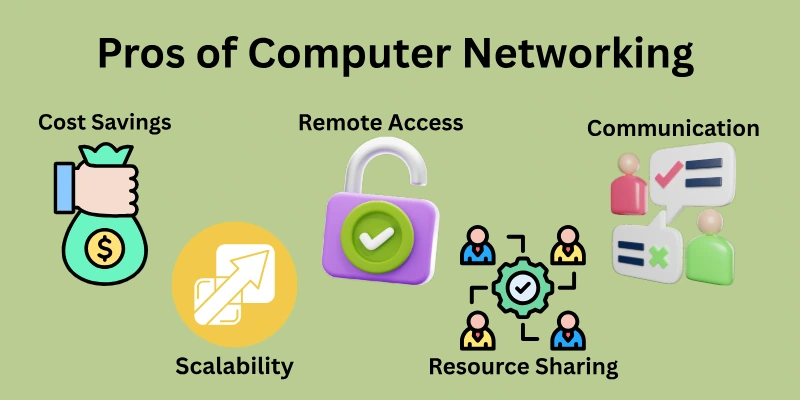
Here are some important benefits of computer networking:
- Improved Communication
- Resource Sharing
- Increased Productivity
- Efficient Data Transfer
- Centralized Management
- Enhanced Accessibility
- Cost Savings
- Scalability
- Enhanced Security
- Remote Access
Let us cover all the above mentioned pros of computer networking in detail.
1. Improved Communication
Users can quickly send notes, emails, and video calls over networks, which helps them work together and make decisions. They remove barriers to contact, encouraging everyone in the organisation to work together and share information.
2. Resource Sharing
By putting resources in one place, networks make it possible to share things like printers and files, which cuts costs and boosts efficiency. Using shared tools makes it easier to work together, get things done, and keep track of work.
3. Increased Productivity
Networking makes it easy to access shared tools and information, which increases efficiency by making it easier to work together. It also lets workers work from home, so they can get work done quickly and easily from anywhere.
4. Efficient Data Transfer
Networks make sure that devices can send and receive data quickly and reliably, so people can get information quickly and do chores that use a lot of bandwidth. High-speed technologies, such as Ethernet and Wi-Fi, make it easy to share data quickly.
5. Centralized Management
Networks allow devices and software to be managed centrally. Which makes maintenance jobs easier and makes sure that everyone in the organisation follows the same security rules. This centralization makes administrative chores easier, which cuts down on costs.
6. Enhanced Accessibility
Networks give everyone access to tools and programmes, so people can work from anywhere with an internet connection. This ease of access encourages adaptability and freedom, letting workers stay connected and get work done while they’re on the go.
7. Cost Savings
Networking lowers the prices of hardware, software, and operations by sharing resources and making operations run more smoothly. This helps save money overall. This lowers costs and makes the company more competitive in the market.
8. Scalability
Networks can easily grow by adding new devices or building out their infrastructure. This makes sure that they can adapt to changing business needs. Because of this, organisations can change to meet new needs without having to make big investments or delays.
9. Enhanced Security
Blocking unauthorised access and cyber risks is possible with network security tools like firewalls, encryption, and access controls. Protecting private data and following rules is made easier with these security features.
10. Remote Access
By allowing remote access to business resources, networking lets employees work from home while still being productive and connected. Work-life balance and business continuity are both helped by this flexibility.
Disadvantages of Computer Networking
While computer networking has many advantages, it also has several drawbacks that organisations should consider.
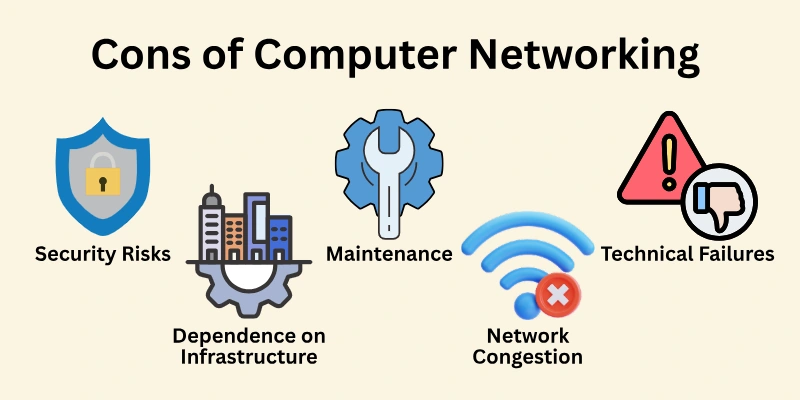
Here are some significant disadvantages of computer networking:
- Security Risks
- Dependence on Infrastructure
- Complexity and Maintenance
- Network Congestion
- Potential for Technical Failures
Let us cover all the above mentioned cons of computer networking in detail.
1. Security Risks
Hackers and bugs can get into computer networks and harm or damage data. It’s like leaving the door open for intruders to get in and mess things up. To protect against this, networks need strong locks (like firewalls) and regular security checks.
2. Dependence on Infrastructure
If something goes wrong with the network’s basic setup (like power or equipment failure), everything can stop. It’s a bit like relying on a single road—if it gets blocked, you’re stuck. And sometimes, you have to trust other companies to keep things running smoothly, which can be risky.
3. Complexity and Maintenance
Setting up and keeping a network running smoothly can be complicated. It’s like having a big complicated machine that needs to be fixed all the time to stay in good shape. This takes time, effort, and skilled people to handle.
4. Network Congestion
When too many devices try to use the network at once, things can slow down or hang. It’s like a busy highway during rush hour—too many cars trying to get through, causing traffic jams. To fix this, you might need to upgrade the network or manage how traffic flows.
5. Potential for Technical Failures
Sometimes, things just stop working for no clear reason. It could be because of a problem with the devices themselves, software bugs, or mistakes made by people. Fixing these issues can take time and effort which causes delay in work.
Conclusion
In this article, we have covered all the advantages and disadvantages of computer networking in detail. We have seen how computer networking is beneficial in saving costs and how one device corruption can harm other devices.
My advice is to approach computer networking with a balanced perspective, understanding both its advantages and disadvantages.
FAQs
Here are some of the most commonly asked questions related to the pros and cons of computer networking:
Advantages of Internet:
- Access to information
- Communication
- Entertainment
- E-commerce
- Connectivity
Disadvantages of Internet:
- Privacy concerns
- Addiction
- Information overload
Advantages of networking are:
- Connect with others
- Save money
- Work from anywhere
- Play together
- Learn from each other
Advantages of computer:
- Do more, faster
- Access to information
- Entertainment hub
- Stay connected
- Creative tool
Disadvantages of computer:
- Can be expensive
- Eye strain and pain
- Addiction potential
- Privacy concerns
- Security risks
The major cons of computer network are:
- Hackers can try to steal information from a network.
- Network issues can slow things down or prevent connections.
- If one part of the network fails, everything can be affected.
- Networks require effort to set up and keep running smoothly.
- Networks have limitations on how much data they can handle.
The major disadvantage of networking business is “competition”. Because the networking business is competitive, with many companies offering similar services.






- Be Respectful
- Stay Relevant
- Stay Positive
- True Feedback
- Encourage Discussion
- Avoid Spamming
- No Fake News
- Don't Copy-Paste
- No Personal Attacks
- Be Respectful
- Stay Relevant
- Stay Positive
- True Feedback
- Encourage Discussion
- Avoid Spamming
- No Fake News
- Don't Copy-Paste
- No Personal Attacks
