Key Pros and Cons of Full-Time Jobs You Should Know
Published: 18 Jan 2026
Are you considering the advantages and disadvantages of full-time job? If yes, then this blog post is for you!
Guys, maintaining a full-time job provides stability, a steady income, and often perks like health insurance and retirement plans.
But one possible downside is that it limits your freedom and gives you less time for personal activities. So finding out about the pros and cons can help you make a smart choice about your job path.
So, without wasting any time, let us dig into all the pros and cons of full-time employment in detail.
Advantages of Full-Time Job
Full-time jobs offer a variety of advantages that can contribute to your financial stability, professional development, and overall well-being.
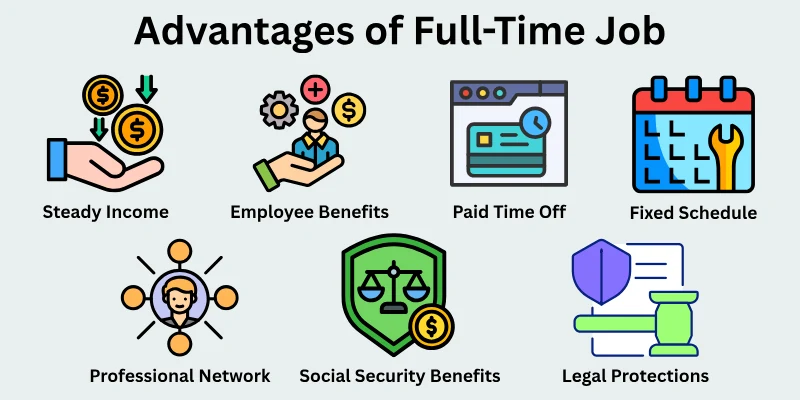
Here’s a quick rundown of some key benefits:
- Steady Income
- Employee Benefits
- Career Advancement Opportunities
- Paid Time Off
- Social Security Benefits
- Fixed Schedule
- Teamwork and Collaboration
- Professional Network
- Greater Job Satisfaction
- Legal Protections
Let us cover all the pros of full time employment in detail.
1. Steady Income
A full-time job provides a steady income to a person. In a full-time job, a person works regularly at a workstation throughout the week or month and receives a regular and steady income at the month’s end. This enables them to manage their future financial plans properly.
2. Employee Benefits
One major advantage of a full-time job is employee benefits. These benefits, such as health insurance, retirement plans, and paid time off, provide security and support for employees. These benefits enhance job satisfaction and contribute to overall well-being.
3. Career Advancement Opportunities
In a full-time workplace, individuals can avail themselves of career growth opportunities. As the requirements of organizations evolve with technological advancements, it becomes necessary for employers to train their employees, thereby enhancing the skills of full-time workers automatically.
4. Paid Time Off
One key advantage of a full-time job is paid time off. This policy allows employees to take regular breaks from work, whether weekly, monthly, or annually, while still receiving their regular pay. It provides flexibility for employees to attend to personal matters or take vacations without worrying about salary.
5. Social Security Benefits
One significant advantage of a full-time job is social security benefits. After retirement, employees receive a fixed income and access to medical facilities, providing financial security and healthcare support. These benefits ensure a stable and comfortable retirement for individuals who have dedicated their careers to full-time employment.
6. Fixed Schedule
An advantage of a full-time job is the fixed schedule it provides. With set working hours, employees can effectively plan and manage their social and family activities around their work commitments, ensuring a healthy work-life balance.
7. Teamwork and Collaboration
A full-time job offers employees the opportunity to work within a team as active members. They interact with colleagues daily at the workplace, promoting strong and healthy professional as well as personal relationships. This teamwork and collaboration enhance productivity and create a supportive work environment.
8. Professional Network
In a full-time job, individuals have the opportunity to build their professional network by interacting with colleagues and other professionals on a daily basis. This creates chances to establish a valuable network of contacts in their field.
9. Greater Job Satisfaction
A full-time job provides financial satisfaction to an employee, helping them feel secure and plan their future properly. This sense of security often leads to greater job satisfaction. And this way employees also tend to feel more valued and committed.
10. Legal Protections
At the start of a full-time job, a legal agreement between the employee and employer is necessary according to the law. This type of legal binding ensures job security for the employee in case of any disputes during their employment.
Disadvantages of Full-Time Job
While full-time employment offers numerous advantages, it’s important to consider the potential downsides to ensure a good fit for your lifestyle and goals.
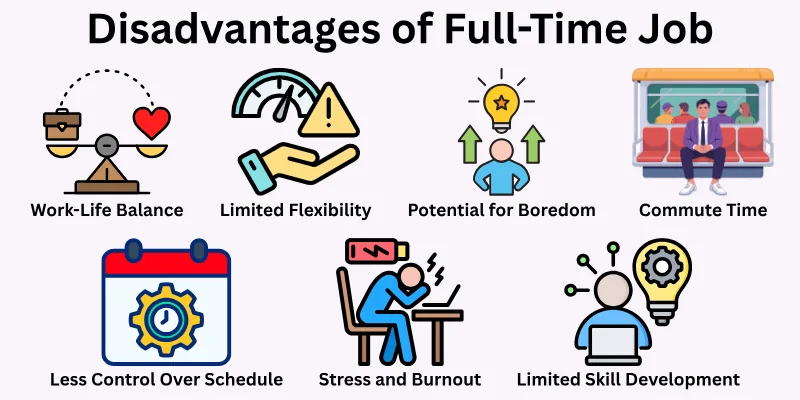
Here are some key factors to keep in mind:
- Work-Life Balance
- Limited Flexibility
- Potential for Boredom
- Stress and Burnout
- Commute Time
- Less Control Over Schedule
- Limited Skill Development (depending on role)
Let us cover all the cons of full time employment in detail.
1. Work-Life Balance
Achieving balance in life is crucial for a person’s health, attitude, behavior, and productivity. However, in a full-time job, employees often struggle with an unbalanced work-life situation, leading them to sacrifice significant life events for their job commitments.
2. Limited Flexibility
In a full-time workplace, employees experience limited flexibility in their work. They’re unable to choose tasks according to their preferences and must adhere to scheduled procedures, reducing their flexibility with time.
3. Potential for Boredom
Sometimes, a full-time employee may feel stuck in a repetitive daily routine, thinking they could accomplish more and that their talents are being wasted. This feeling of monotony can lead to boredom, affecting their productivity and potential.
4. Stress and Burnout
In a full-time job, employees often experience long working hours, dedicating a significant portion of their lives to their workplace. This can lead to stress and a lack of pleasure, impacting their mental well-being.
5. Commute Time
The disadvantage of a full-time job is commute time. It’s the time employees spend traveling from home to work and back again. Many workers feel they waste too many hours commuting every day.
6. Less Control Over Schedule
In a full-time job, employees must adhere to a set schedule without much flexibility. They have little control over their workload or the timing of their tasks, often resulting in a rigid work routine. This schedule can lead to difficulty in balancing work and personal commitments.
7. Limited Skill Development (depending on role)
In a full-time job, employees often find themselves performing routine tasks on a daily basis, limiting opportunities for skill development. The nature of full-time roles tends to focus on static skill sets, lacking variety and opportunities for growth.
Conclusion
In this article, we have covered all the advantages and disadvantages of full-time employment in detail. We have seen how full-time employment can be beneficial for you and also examined how you may need to adhere to all aspects of a company’s policies.
My advice is to prioritize your job, but also consider moving into online business as technology advances. This way, you can potentially increase your income.
FAQs
Here are some of the most commonly asked questions related to the advantages and disadvantages of a full-time job:
A full-time job is one where the person works the set number of hours per week set by the boss, which is usually around 40 hours.
Yes, because. It comes up with stability, a steady income, and other benefits. However, it may also limit flexibility and personal time.
Disadvantages of a 9 to 5 job include limited flexibility in work hours, potential for burnout due to a rigid schedule, and less time for personal pursuits.
A full-time job can also be referred to as permanent employment, regular employment, or traditional employment.
Part-time jobs offer flexibility and can be suitable for students or those balancing multiple responsibilities. However, they often lack benefits and may offer lower pay than full-time positions.
The main difference is in the number of hours worked per week. Full-time jobs typically require around 40 hours per week, while part-time jobs involve fewer hours, often varying depending on the employer’s needs.






- Be Respectful
- Stay Relevant
- Stay Positive
- True Feedback
- Encourage Discussion
- Avoid Spamming
- No Fake News
- Don't Copy-Paste
- No Personal Attacks
- Be Respectful
- Stay Relevant
- Stay Positive
- True Feedback
- Encourage Discussion
- Avoid Spamming
- No Fake News
- Don't Copy-Paste
- No Personal Attacks
