Pros and Cons of Online Learning: Is Virtual Learning for You?
Published: 9 Dec 2025
Millions of students worldwide are choosing online learning for their education. But is it the right choice for you?
This article explores the advantages and disadvantages of online learning, helping you decide if this flexible learning style can empower you to achieve your academic goals.
Now, to decide whether this is the right approach for your learning or not, let’s dive into the pros and cons section of eLearning.
Advantages of Online Learning
Online learning has become a game-changer in education, offering a multitude of advantages for students.
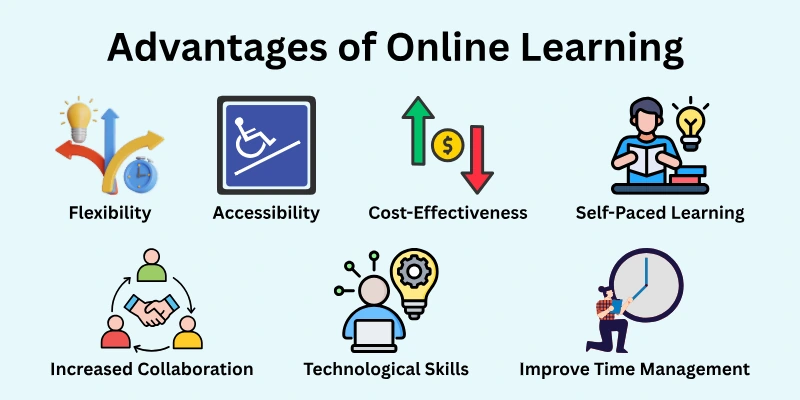
Here’s a look at some of the key benefits it brings to the table:
- Flexibility
- Accessibility
- Cost-Effectiveness
- Self-Paced Learning
- Wider Course Selection
- Improved Time Management Skills
- Enhanced Technological Skills
- Comfortable Learning Environment
- Increased Collaboration Opportunities
- Catered to Different Learning Styles
Let’s learn the above mentioned pros of eLearning in detail.
1. Flexibility
- Online learning enables students to plan their education around other obligations, such as employment or family duties.
- Learners can access course materials and join in conversations whenever they want, from any location with an internet connection.
- This flexibility allows people to pursue their education without being limited by traditional classroom schedules.
2. Accessibility
- Online learning gets rid of physical barriers, giving students all over the world the chance to learn.
- People who have trouble moving around or who are physically disabled can get an education more easily from home.
- Online systems often have options for students with different learning needs, which makes education easier for more people.
3. Cost-Effectiveness
- Most of the time, online classes are cheaper than standard on-campus programs.
- This saves students money on things like tuition, housing, and transportation, as many tools are available online, like textbooks and course materials.
- Students can also save money by not having to pay for things like campus buildings and services.
4. Self-Paced Learning
- Students can go through course materials at their own pace when they learn online, which is helpful for students who learn in different ways or at different speeds.
- People are free to go over difficult ideas as many times as they need to until they fully understand them.
- This self-paced method helps you understand the subject better and encourages you to keep learning throughout your life.
5. Wider Course Selection
- There are a lot of different classes and subjects available on online platforms, so students can choose from a wide range of learning options.
- It is possible for students to follow their academic interests no matter where they are because many schools around the world offer a wide range of programs.
- Everyone can make their education fit their job goals and personal interests with this wide range of options.
6. Improved Time Management Skills
- Online learning requires students to manage their time effectively to balance coursework with other commitments.
- In order to meet the due dates for assignments and tests and make study schedules, students learn how to effectively handle their time.
- Task prioritization and time management skills are useful in many areas of life and improve general success and productivity.
7. Enhanced Technological Skills
- Online learning requires students to be good at using digital platforms and tools, which improves their technological skills.
- People learn how to use online learning management systems, take part in online discussions, and get to multimedia tools.
- These tech skills are becoming more and more useful in today’s digital world, making people more flexible in a tech-driven industry.
8. Comfortable Learning Environment
- For students who learn online, studying in a familiar and relaxed space helps them concentrate and avoid distractions.
- Learners can make their own study spaces that fit their needs and tastes.
- Allowing students to study from home or another place of their choice makes the learning environment more relaxed and helpful.
9. Increased Collaboration Opportunities
- Students can work together and talk to each other through virtual discussions, group projects, and peer feedback on online learning tools.
- Students can talk to peers who come from different places and have different points of view.
- Collaboration tasks help people learn how to work together and make friends, even if they are far apart. This builds a sense of community among students.
10. Catered to Different Learning Styles
- Different learning styles and tastes can be accommodated by online learning because it gives teachers more freedom over how they teach.
- Learners can pick the multimedia tools that work best for them, such as videos, interactive podcasts, and written materials.
- These adaptive learning technologies can make learning more personalized by changing the pace and material based on how well students are doing and how they like to learn.
Disadvantages of Online Learning
While online learning offers a wealth of flexibility and convenience, it also comes with some drawbacks to consider.
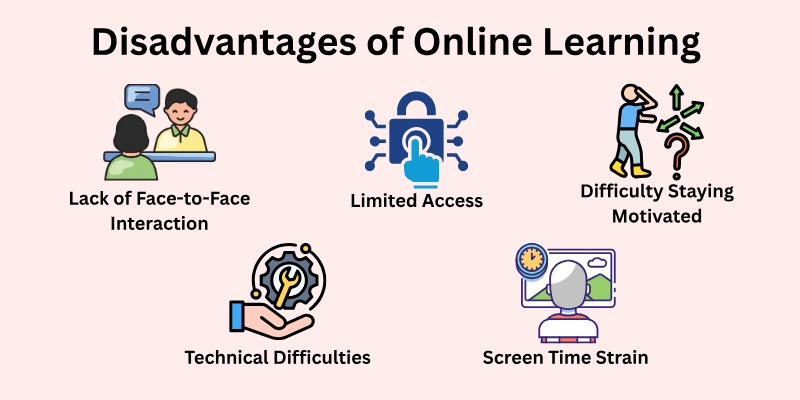
Here’s a quick list of some potential downsides:
- Lack of Face-to-Face Interaction
- Difficulty Staying Motivated
- Limited Access to Resources and Support
- Technical Difficulties
- Isolation
- Screen Time Strain
- Potentially Uneven Assessment
- Inaccessibility for Some Learners
Let’s cover all the above mentioned cons of eLearning in detail.
1. Lack of Face-to-Face Interaction
- E-learning lacks direct interaction with instructors and peers.
- Students may face difficulty in asking questions and receiving immediate feedback from the teachers.
- And these Limited opportunities for collaboration and group discussions may impact social learning.
2. Difficulty Staying Motivated
- Without physical presence students may struggle to maintain discipline.
- Distractions at home or in informal learning situations could affect concentration.
- Lack of accountability and external pressure may lead to laziness and decreased engagement.
3. Limited Access to Resources and Support
- Online learners may have no access to real libraries, laboratories, and specialist equipment.
- Remote assistance from instructors may be delayed or less effective than in-person help.
- Access problems to extra materials, classes, or software that is needed for learning can slow down your academic progress.
4. Technical Difficulties
- Connectivity issues, software glitches, or hardware malfunctions can disrupt learning sessions.
- Insufficient technical abilities or equipment can limit participation in an online class.
- Moreover, troubleshooting technical problems can be time-consuming and frustrating.
5. Isolation
- When you learn online, you don’t get to talk to other people in person, which can make you feel lonely and disconnected.
- And, absence of physical presence in a learning community also limits the development of interpersonal skills.
- Not having many chances to meet new people and network informally can make learning less enjoyable overall.
6. Screen Time Strain
- Excessive screen time may result in eye strain, headaches, and other bodily discomforts.
- Excessive screen time without breaks can cause fatigue, weakened concentration, and lower productivity.
- Balancing online learning with other screen-related activities may pose mental and physical health risks.
7. Potentially Uneven Assessment
- Students’ knowledge and skills may not always be properly measured by online tests because they are not always fair and reliable.
- Online tests can make it harder to stop or catch people who are cheating or copying, which is unfair to honest students.
- Without being supervised in person, some students might get unfair benefits or disadvantages on tests.
8. Inaccessibility for Some Learners
- Some students may have trouble with online learning because they don’t have the right technology or a stable internet link.
- Socioeconomic differences can make the gap bigger, as it may be harder for students from lower-income families to get to online tools.
- Disability-identified individuals may have trouble managing online platforms that aren’t made to meet their specific needs.
Conclusion
In this article, we have covered all the advantages and disadvantages of online learning in detail. Guys, there is no doubt that the learning lifestyle has totally changed, and many people prefer learning online to going to a physical institute because they want to manage their learning with some income, like part-time jobs.
But again, learning online has many drawbacks too, so to make an informed decision, you guys need to go through the above-mentioned pros and cons of eLearning and then decide which approach is good to go with.
FAQs
Here are some of the most commonly asked questions related to the advantages and disadvantages of e-learning:
Advantages of learning online:
- Flexibility in scheduling.
- Access to a wide range of courses and resources.
- Cost-effective compared to traditional education.
Disadvantages of learning online:
- Lack of face-to-face interaction.
- Potential for distractions.
- Dependence on technology and internet connectivity.
Disadvantages of E-learning are:
- Limited social interaction.
- Technical difficulties can disrupt learning.
- Requires self-discipline and motivation.
- Potential for isolation and loneliness.
Advantages of E-learning:
- Flexibility in scheduling and pace of learning.
- Access to a diverse range of courses and instructors.
- Cost-effectiveness in terms of both time and money.
- Opportunity for self-directed learning and personalized education.
Traditional vs. Online Learning:
- Traditional: Structured environment, social interaction, immediate feedback.
- Online: Flexible, self-paced, wider course variety.
Both methods have advantages and disadvantages. The best choice depends on your individual learning style and needs.
There isn’t one single most used software, but popular options include:
- Learning Management Systems (LMS) like Blackboard or Canvas
- Video conferencing tools like Zoom or Google Meet
- Massive Open Online Courses (MOOCs) platforms like Coursera or edX
Face-to-face offers better social interaction and immediate feedback, while online provides flexibility and caters to diverse learning styles. Neither is inherently better; the best method depends on individual needs and learning styles.




- Be Respectful
- Stay Relevant
- Stay Positive
- True Feedback
- Encourage Discussion
- Avoid Spamming
- No Fake News
- Don't Copy-Paste
- No Personal Attacks
- Be Respectful
- Stay Relevant
- Stay Positive
- True Feedback
- Encourage Discussion
- Avoid Spamming
- No Fake News
- Don't Copy-Paste
- No Personal Attacks
