Digital Marketing vs. Affiliate Marketing: Complete Comparison
Published: 24 Sep 2026
Affiliate marketing and digital marketing are both ways to promote stuff online. But here’s the catch: affiliate marketing is actually a type of digital marketing. Confusing, right?
Don’t worry; we’ll clear it all up.
In this article, we’ll discuss what makes them different. So, get ready to dive into the basics and understand what sets them apart in the online world.
Definition Overview: Affiliate Marketing vs. Digital Marketing
Let’s start by breaking down the basics of two important online marketing strategies: affiliate marketing and digital marketing.
Affiliate Marketing
- Affiliate marketing is when you help sell someone else’s products or services online and earn a commission for every sale you make.
- Basically, you promote stuff, and if people buy it through your special link, you get paid.
- This concept has been around for a while, but it really took off with the rise of the internet.
- Back in the day, it was mainly done through websites and email, but now it’s all over social media and other online platforms.
Digital Marketing
- Digital marketing is a set of different strategies that are used by businesses to promote themselves online.
- It includes things like websites, social media, emails, and online ads.
- Basically, anything you see on your computer or phone screen that’s trying to sell you something is part of digital marketing.
- Over time, as technology has advanced, digital marketing has become more sophisticated, but its main goal remains the same: reaching people where they spend a lot of their time online.
Key Concepts & Components: Affiliate vs. Digital Marketing
In this section, we’ll break down the key concepts and components of both affiliate marketing and digital marketing, helping you understand how they work and what makes them different.

Affiliate Marketing
Here we discuss key concepts of Affiliate marketing in detail:
Participants
In affiliate marketing, there are three main players: affiliates, merchants, and consumers. Affiliates are the ones promoting products or services, merchants are the ones selling them, and consumers are the ones buying them.
Working
Affiliate marketing works by affiliates promoting products or services through special links, and when consumers make a purchase through those links, affiliates earn a commission.
Types of Affiliate Marketing
There are different types of affiliate marketing, like unattached, related, and involved. Unattached means promoting without being directly involved, related means promoting products in your niche, and involved means actively engaging with the product or service.
Commission Structures
Affiliates earn money in different ways. Sometimes they get a fixed amount for each sale they make, and other times they get a percentage of the sale price.
Digital Marketing
Here we discussed the key concepts of digital marketing in detail:
Channels
Digital marketing uses different ways to reach people online. These include:
- Search engine optimization (SEO) improves a website’s ranking in search results.
- Paid advertising through search engine marketing (SEM) places ads prominently in searches.
- Social media platforms like Facebook and Instagram connect directly with customers.
- Email marketing keeps interested audiences engaged through targeted messages.
And finally, creating informative and engaging content attracts viewers and builds interest.
Strategies
Depending on whether a business is selling to other businesses (B2B) or directly to consumers (B2C), they’ll use different tactics to get their message across.
For example, a B2B company might focus on building relationships with other businesses, while a B2C company might concentrate on making their products look appealing to regular people.
Tools and Platforms
There are lots of tools and websites that help with digital marketing.
For example, Google Analytics helps you see how many people are visiting your website and where they’re coming from, HubSpot helps you manage your marketing efforts, and Hootsuite lets you schedule and track your social media posts.
Metrics and KPIs
Digital marketers use numbers to see if their efforts are paying off.
These numbers can include things like how many people clicked on an ad (click-through rate), how many people took action after clicking on an ad (conversion rate), and how much money a customer is likely to spend over their lifetime (customer lifetime value).
Objectives & Goals: Affiliate vs. Digital Marketing
Let’s talk about what affiliate marketing and digital marketing aim to achieve. They both have different goals, but they’re equally important in the online world.
Affiliate Marketing
We discussed the objective of affiliate marketing in detail:
Generating Passive Income
One of the big goals of affiliate marketing is to make money without having to actively work all the time. Once you set things up and start promoting products, you can earn money even when you’re not actively promoting.
Leveraging Existing Audiences
If you already have a following on social media or a blog, affiliate marketing lets you use that audience to promote products or services. You’re basically making money from the people who already trust and like you.
Expanding Product Reach
Affiliate marketing helps businesses reach more people by tapping into the audiences of affiliates. It’s like having lots of little sales teams all over the internet, spreading the word about products or services.
Digital Marketing
We discuss the objective of digital marketing in detail:
Brand Awareness and Visibility
Digital marketing helps businesses get their name out there and make sure people know who they are. By using things like social media, ads, and content, they can reach a wider audience and get more people talking about them.
Lead Generation and Nurturing
Digital marketing is also about finding potential customers and turning them into actual customers. This means getting people interested in what you’re offering and then keeping them engaged until they’re ready to buy.
Customer Engagement and Retention
Once someone becomes a customer, digital marketing helps businesses keep them happy and coming back for more. This might mean sending them special offers or keeping in touch through email or social media.
Driving Online Sales and Conversions
Ultimately, digital marketing is about getting people to take action – whether that’s buying something, signing up for a newsletter, or just clicking on a link. By using different tactics, businesses can encourage people to do what they want them to do online.
Benefits: Affiliate vs. Digital Marketing
Now, let’s dive into the perks of both affiliate marketing and digital marketing. These are the advantages they offer.
Affiliate Marketing
We covered the advantages of affiliate marketing in detail:
Cost-Effective (Pay-for-Performance)
With affiliate marketing, businesses only pay when they get results, like when someone makes a purchase. This means they’re not wasting money on ads that don’t work.
Low Risk for Merchants
Since merchants only pay when they make a sale, affiliate marketing is less risky than other forms of advertising. They don’t have to spend money upfront and hope it pays off.
Access to New Markets and Audiences
Affiliates often have their own followers and fans, so businesses can reach new people easily. It’s like getting a foot in the door with new markets and audiences.
Digital Marketing
We covered the advantages of digital marketing in detail:
Wide Reach and Accessibility
Digital marketing allows businesses to reach a huge audience online, no matter where they are. Whether someone’s on their computer, phone, or tablet, businesses can connect with them.
Real-Time Data and Analytics
With digital marketing, businesses can see how their campaigns are performing. They can track things like website visits, clicks, and purchases, and use that data to optimise their marketing strategies more effectively.
Flexibility and Scalability
Because digital marketing is adaptable, companies can quickly and easily change their plans if something isn’t working. And as they grow, they can scale up their efforts to reach even more people.
Enhanced Customer Targeting and Personalization
Businesses can use digital marketing to target certain groups of people based on their interests, demographics, and online behavior. This enables customized marketing communications that resonate with clients.
Challenges: Affiliate vs. Digital Marketing
Here is a set of challenges that come with affiliate marketing and digital marketing. These are the problems businesses might face when using these strategies.
Affiliate Marketing
We covered the disadvantages of affiliate marketing in detail:
Fraudulent Activities
Sometimes, people try to cheat the system by faking sales or clicks. This can cost businesses money and make it hard to trust their affiliates.
Dependency on Affiliate Performance
Businesses rely on affiliates to promote their products well. If affiliates don’t do a good job, sales can suffer.
Commission Costs
Businesses have to pay affiliates a part of their earnings. This means they earn less from each sale compared to selling directly.
Digital Marketing
We covered the advantages of digital marketing in detail:
Rapidly Changing Technology and Trends
Technology and online trends change quickly. Businesses need to keep up with the latest tools and tactics, which can be hard.
High Competition
Many businesses are using digital marketing, so there’s a lot of competition. Standing out and getting noticed can be difficult.
Privacy and Data Protection Issues
With more data being collected online, protecting customer privacy and following data protection laws is a big challenge.
Resource-Intensive
Digital marketing can take a lot of time, money, and effort. Creating content, managing campaigns, and analyzing results all require significant resources.
Techniques and Strategies: Affiliate vs. Digital Marketing
Here are some techniques and strategies used in both affiliate marketing and digital marketing. We’ll keep things simple and easy to understand.
Affiliate Marketing
We covered the techniques of affiliate marketing in detail:
Choosing the Right Affiliates
It’s important to pick the right partners to promote your products. This means checking their background and seeing if they have the right audience for your products.
Creating Attractive Affiliate Programs
To attract good affiliates, you need to offer good incentives, communicate clearly, and provide support. This means giving them a fair commission, keeping in touch, and helping them succeed.
Tracking and Monitoring
Use tools to see how well your affiliates are doing. This helps you understand what’s working and what’s not, so you can make improvements.
Compliance and Ethics
Make sure your affiliates follow the rules and laws. This means being honest and transparent about promotions and ensuring everyone is playing fair.
Digital Marketing
We covered the techniques of digital marketing in detail:
SEO and SEM
Search Engine Optimization, or SEO, is the process of making your website better so that it ranks higher in search results. This includes things like using the right keywords and getting other websites to link to yours. Search Engine Marketing, or SEM, is the process of paying for ads to show up in search results, like Google Ads.
Content Marketing
This is about creating valuable content like blog posts, videos, and infographics that are useful and interesting for your audience. The goal is to get people to visit your site by giving them useful information.
Social Media Marketing
Different social media platforms need different strategies. This involves creating content that fits the platform (like photos for Instagram or posts for Facebook) and engaging with your audience by responding to comments and messages.
Email Marketing
This involves building a list of people interested in your products, setting up automatic email campaigns to keep them up to date, and personalizing the emails to make them feel special and more likely to buy.
Analytics and Optimization
Test different plans with A/B testing tools to find the best one. This includes measuring conversion rates (how many people take action) and making changes to your ads all the time to get better results.
Key Comparison
Here are some major differences between affiliate marketing and digital marketing.
Cost
Here is a cost comparison of both:
Affiliate Marketing
- The initial investment is usually low. Businesses pay affiliates a commission only when a sale is made.
- Ongoing expenses include managing the affiliate program and paying commissions.
Digital Marketing
- Initial costs can be higher due to spending on ads, creating content, and using marketing tools.
- Ongoing expenses include maintaining these campaigns, paying for ads, and using analytics tools.
ROI
Here is the comparison of ROI (Return on Investment) for both marketing types:
Affiliate Marketing
ROI can be high since businesses only pay for actual sales. However, it depends on the affiliates’ performance and the commission rates.
Digital Marketing
ROI can vary. There’s a chance that you’ll spend a lot of money on ads or content and not make many sales if your plan is not successful.
Growth Potential and Limitations
Here is the scalability comparison:
Affiliate Marketing
Can scale quickly by adding more affiliates. However, finding quality affiliates and managing them can become challenging.
Digital Marketing
Highly scalable with potential to reach a global audience. However, it requires more resources and budget for ads, content creation, and expertise.
Control and Flexibility
Here is the difference in terms of control between the two online strategies:
Affiliate Marketing
Less control over how affiliates promote products. Businesses can provide guidelines, but affiliates have their own methods and styles.
Digital Marketing
More control over every aspect of campaigns, including messaging, design, and targeting. Businesses can directly manage how their brand is presented.
Suitability for Business Types
Here are types of businesses best suited for each approach:
Affiliate Marketing
Ideal for e-commerce businesses, online services, and products that can be easily promoted through influencers or bloggers.
Digital Marketing
It works for all kinds of businesses, both B2B and B2C. It helps people learn about your brand, find new customers, get them involved, and make sales online.
Can Affiliate Marketing and Digital Marketing Work Together?
Yes, affiliate marketing and digital marketing can work well together. By using affiliate marketing, businesses can get help from affiliates to promote their products and reach more people.
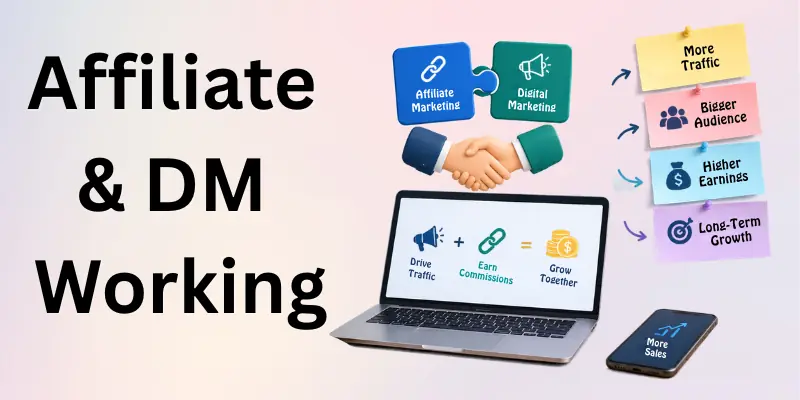
Digital marketing supports this by using other channels like SEO, social media, and email marketing to reach even more customers.
This combination helps businesses get the most out of their online efforts, making it easier to track success and adjust strategies for better performance.
Conclusion
Alright, that’s it!
We explored the world of affiliate marketing and digital marketing, and how they’re different. Remember, these are like two sides of the same coin; they can actually work together really well!
Here’s the key tip: Don’t try to do affiliate marketing all by itself. Use it as part of your bigger digital marketing plan. Find partners who like your stuff and whose audience would be interested in what you offer. By working together, you can spread the word about your brand and get more sales!
FAQs
1. Is affiliate marketing easier than digital marketing?
Affiliate marketing can be easier to get started with because you don’t need to create your own products or manage a complex marketing strategy.
2. Can I do both affiliate marketing and digital marketing for my business?
Absolutely! In fact, it’s a great way to expand your reach and boost sales. Affiliate marketing supplements your digital marketing efforts by introducing new audiences via trusted partners.
3. How do I find good affiliates to promote my products?
Look for affiliates who are relevant to your niche and have a strong online presence. Many affiliate networks can connect you with potential partners.
4. What kind of content should I create for affiliate marketing?
Focus on informative and engaging content that reflects the value of the products you promote. Reviews, tutorials, how-to guides, and comparisons are popular choices.
5. How much money can I make with affiliate marketing?
Your earnings depend on various factors like the commission rate, product price, and your ability to generate traffic and conversions.
6. Do I need a website to do affiliate marketing?
Not necessarily! You can promote products through social media channels, email marketing, or even video platforms like YouTube. However, having a website can give you more control and allow you to build a long-term audience.




- Be Respectful
- Stay Relevant
- Stay Positive
- True Feedback
- Encourage Discussion
- Avoid Spamming
- No Fake News
- Don't Copy-Paste
- No Personal Attacks
- Be Respectful
- Stay Relevant
- Stay Positive
- True Feedback
- Encourage Discussion
- Avoid Spamming
- No Fake News
- Don't Copy-Paste
- No Personal Attacks
