Pros and Cons of E-commerce: Shop Smarter Online
Published: 11 Feb 2026
In our increasingly digital world, e-commerce has become an integral part of our lives. With just a few clicks, we have the ability to purchase anything from the comfort of our own homes.
But is all the hype around online shopping justified? Does it really live up to its promises? In this article, we will uncover the pros and cons of e-commerce and determine whether it’s worth the investment of time and money.
So guys, without wasting time, let’s dig into the world of advantages and disadvantages of e-commerce in detail.
Advantages of E-commerce
On the positive side, e-commerce offers convenience and accessibility. Gone are the days of battling through crowded shopping malls and waiting in long checkout lines.
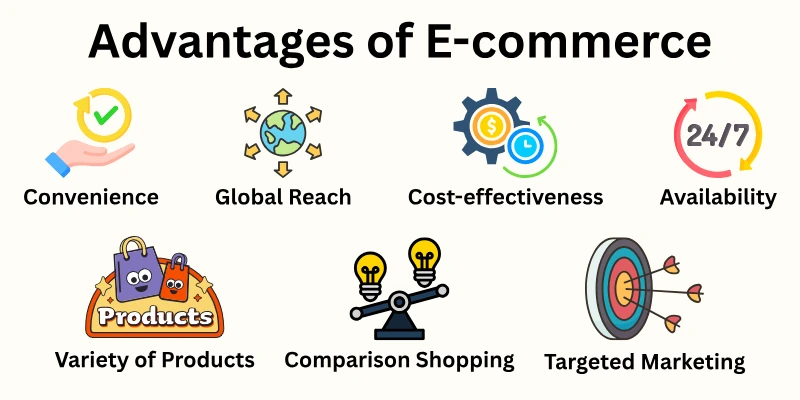
With e-commerce, you can shop anytime, anywhere, and have your purchases delivered right to your doorstep. Additionally, online shopping opens up a world of options, allowing you to easily compare prices, read reviews, and find the best deals.
So, here is the list of all the benefits of e-commerce:
- Convenience
- Accessibility
- Global Reach
- Cost-effectiveness
- 24/7 Availability
- Variety of Products
- Comparison Shopping
- Lower Overhead Costs
- Targeted Marketing
- Easy Scalability
- Streamlined Inventory Management
- Personalized Shopping Experience
- Enhanced Customer Service
- Faster Transaction Processing
- Reduced Geographical Limitations
Let’s cover each positive of online shopping.
1. Convenience
- You can shop from home, avoiding long lines and traffic.
- No need to travel to stores, saving time and energy.
- You can shop anytime, even late at night or early in the morning.
2. Accessibility
- Anyone with an internet connection can shop online.
- People with disabilities can easily access online stores.
- Remote or rural areas can enjoy shopping options without local stores.
3. Global Reach
- You can buy and sell items from anywhere in the world.
- Small businesses can reach customers worldwide, not just locally.
- Customers can find unique products from different cultures and places.
4. Cost-effectiveness
- Online stores often offer lower prices due to reduced overhead costs.
- You save money on gas and transportation by shopping online.
- Discounts and deals are readily available online.
5. 24/7 Availability
- Online stores are open all day, every day, so you can shop whenever you want.
- No need to worry about store closing times or holidays.
- You can make purchases at your convenience, even during odd hours.
6. Variety of Products
- Online stores offer a wide range of products, from clothes to electronics to groceries.
- You can find items from different brands and sellers in one place.
- Rare or niche products that may not be available locally can be found online.
7. Comparison Shopping
- You can easily compare prices and features of products from different sellers.
- Reviews and ratings help you make informed decisions about purchases.
- You can find the best deals and value for your money.
8. Lower Overhead Costs
- Online businesses have lower expenses like rent and utilities compared to physical stores.
- This often leads to lower prices for customers.
- Small businesses can start online with minimal investment.
9. Targeted Marketing
- Online stores can personalize recommendations based on your browsing and purchase history.
- Sellers can target specific groups of customers with advertisements and promotions.
- Marketing strategies can be tailored to reach the right audience effectively.
10. Easy Scalability
- Online businesses can easily grow and expand their operations.
- Adding new products or services is simple and cost-effective.
- Scalability allows businesses to adapt quickly to changing demands and trends.
11. Streamlined Inventory Management
- Online stores can track inventory levels in real-time, reducing the risk of stockouts.
- Automated systems help manage orders, shipping, and returns efficiently.
- Businesses can optimize inventory levels and reduce excess stock.
12. Personalized Shopping Experience
- Online stores can offer personalized recommendations and product suggestions.
- Customers can create accounts with preferences and saved payment methods for faster checkout.
- Personalized communication and customer service enhance the shopping experience.
13. Enhanced Customer Service
- Online stores provide various channels for customer support, such as live chat, email, and phone.
- Quick responses and resolutions to queries and issues improve customer satisfaction.
- Customers can access self-service resources like FAQs and tutorials for assistance.
14. Faster Transaction Processing
- Online payments are processed instantly, reducing checkout times.
- Digital transactions eliminate the need for manual handling of cash or checks.
- Secure payment gateways ensure safe and smooth transactions.
15. Reduced Geographical Limitations
- Online shopping eliminates geographical barriers, allowing customers to buy from anywhere.
- Businesses can reach customers in remote or underserved areas without physical stores.
- Shipping and delivery services make it possible to receive purchases worldwide.
Disadvantages of E-commerce
On the flip side, e-commerce also has its disadvantages. Without the ability to physically touch and feel a product before purchasing, it can be challenging to assess its quality.
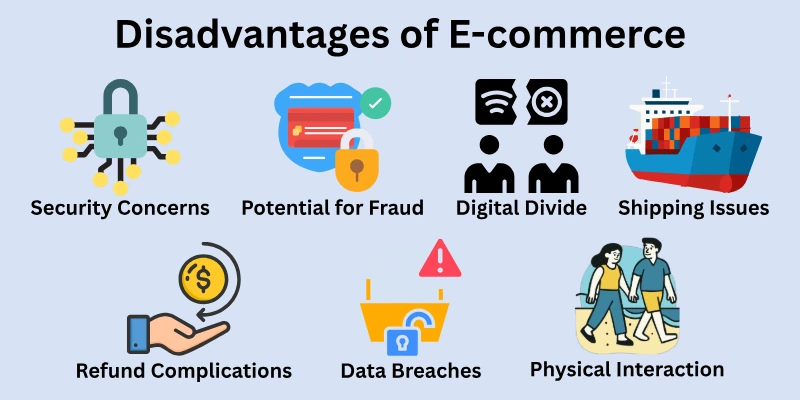
Furthermore, there’s the risk of online scams and fraud, as well as the potential for delayed or lost shipments.
So, love ones, here is a list of the drawbacks of online shopping:
- Security Concerns
- Lack of Physical Interaction
- Potential for Fraud
- Dependence on Technology
- Shipping Delays and Issues
- Difficulty in Assessing Product Quality
- Limited Customer Service
- Potential for Data Breaches
- Digital Divide
- Return and Refund Complications
Let’s cover each disadvantage of e-commerce in detail.
1. Security Concerns
- Online transactions may be susceptible to hacking and cyberattacks, compromising sensitive information.
- Customers may hesitate to share personal and financial details online due to fears of identity theft or fraud.
- E-commerce platforms must invest in robust security measures to protect user data and maintain trust.
2. Lack of Physical Interaction
- Online shopping lacks the tactile experience of physically examining products before purchase.
- Customers may struggle to accurately gauge factors like size, texture, or color without seeing items in person.
- The absence of face-to-face interaction with sales staff can lead to uncertainty or dissatisfaction with purchases.
3. Potential for Fraud
- Fraudulent sellers may create fake online stores or listings to scam unsuspecting buyers.
- Customers may receive counterfeit or misrepresented products, leading to disappointment and financial loss.
- E-commerce platforms must implement strict verification processes to detect and prevent fraudulent activities.
4. Dependence on Technology
- Technical glitches, server outages, or internet connectivity issues can disrupt the online shopping experience.
- Older adults or individuals with limited technological literacy may struggle to navigate e-commerce platforms.
- Businesses must ensure website compatibility across various devices and browsers to reach all potential customers.
5. Shipping Delays and Issues
- Customers may experience delays or complications with shipping, resulting in frustration and dissatisfaction.
- Unreliable shipping carriers or logistical challenges can lead to lost or damaged packages.
- E-commerce businesses must establish efficient shipping processes and provide transparent tracking information to mitigate these issues.
6. Difficulty in Assessing Product Quality
- Online shoppers rely on product descriptions, images, and reviews to judge the quality and authenticity of items.
- Differences in screen resolution or photography techniques may distort the appearance of products.
- Customers may receive products that do not meet their expectations in terms of quality or appearance.
7. Limited Customer Service
- Online shoppers may encounter challenges in accessing prompt and personalized customer support.
- Automated chatbots or email responses may not adequately address complex inquiries or issues.
- E-commerce businesses must invest in responsive customer service channels to maintain customer satisfaction and loyalty.
8. Potential for Data Breaches
- E-commerce platforms store vast amounts of customer data, making them attractive targets for hackers.
- Data breaches can expose sensitive information, such as credit card details or personal addresses, putting customers at risk of financial harm or identity theft.
- E-commerce businesses must prioritize data security measures, including encryption and regular security audits, to safeguard customer information.
9. Digital Divide
- Not all individuals have equal access to the internet or digital devices, limiting their participation in e-commerce.
- Socioeconomic disparities and geographic factors can exacerbate the digital divide, excluding marginalized communities from online shopping opportunities.
- Governments and organizations must address infrastructure gaps and provide digital literacy programs to bridge the digital divide and promote digital inclusivity.
10. Return and Refund Complications
- Returning items purchased online can be cumbersome and time-consuming, particularly for large or bulky items.
- E-commerce return policies may impose strict deadlines or restocking fees, discouraging customers from initiating returns.
- Customers may encounter delays or complications in receiving refunds, leading to dissatisfaction and distrust towards e-commerce businesses.
Conclusion
So, guys, in this article, we have covered the advantages and disadvantages of e-commerce in detail. We explored how e-commerce offers convenience, global reach, and a wide variety of products, but also highlighted concerns such as security risks, lack of physical interaction, and potential for fraud.
Whether e-commerce is worth the hype depends on your personal preferences and circumstances. If you value convenience and the ability to shop from the comfort of your own home, then e-commerce can be a great option for you.
However, if you prefer the tactile experience of physically shopping and have concerns about product quality and online security, then traditional brick-and-mortar stores may be a better fit.
FAQs
Here are some of the most commonly asked questions related to the pros and cons of online shopping:
Yes, e-commerce refers to buying and selling goods or services over the internet, which includes online shopping.
E-commerce allows businesses to reach a global audience, offers convenience to customers, reduces overhead costs, and enables easy scalability.
There are generally four main types of e-commerce models: B2C (business-to-consumer), B2B (business-to-business), C2C (consumer-to-consumer), and C2B (consumer-to-business).
It depends on various factors such as the nature of the business, target audience, and market trends. E-commerce offers advantages like global reach and scalability, while traditional businesses may focus on personal interactions and localized markets.
E-commerce has disrupted traditional business models, but it doesn’t necessarily mean the complete elimination of traditional businesses. Both types of businesses can coexist and adapt to changing consumer preferences and market dynamics.






- Be Respectful
- Stay Relevant
- Stay Positive
- True Feedback
- Encourage Discussion
- Avoid Spamming
- No Fake News
- Don't Copy-Paste
- No Personal Attacks
- Be Respectful
- Stay Relevant
- Stay Positive
- True Feedback
- Encourage Discussion
- Avoid Spamming
- No Fake News
- Don't Copy-Paste
- No Personal Attacks
