Pros and Cons of Search Engine Marketing: Is It Worth the Cost?
Published: 24 Nov 2025
Did you know that over 90% of online experiences begin with a search engine? [Stat on internet searches can vary slightly depending on the source. This one is from Neil Patel]
That’s a massive number of potential customers looking for products and services like yours. But how do you get your website seen amongst all the competition?
Enter Search Engine Marketing (SEM), a powerful tool that can help you achieve just that.
This article will delve into the advantages and disadvantages of SEM, giving you a clear picture of how it can benefit your business and what to consider before diving in.
Advantages of Search Engine Marketing
SEM is a powerful tool for businesses of all sizes to reach their target audience. By using search engine marketing strategies, you can improve visibility of your businesses in search engine results pages (SERPs).
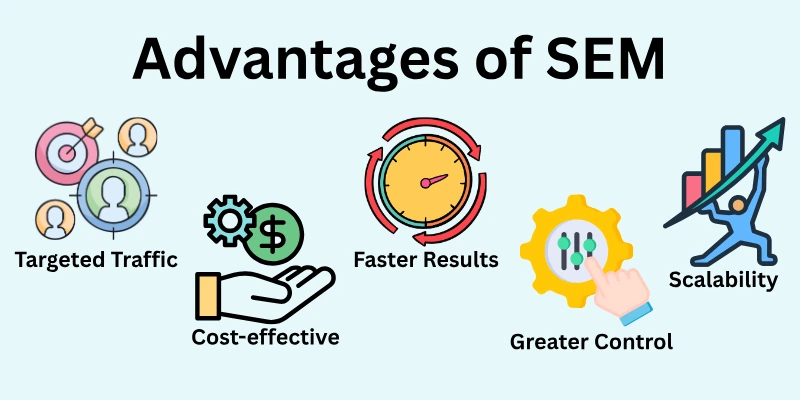
Here are some of the advantages of SEM:
- Increased Website Traffic
- Targeted Traffic
- Improved Brand Awareness
- Higher Conversion Rates
- Measurable Results
- Cost-effective
- Faster Results
- Greater Control
- Scalability
- Multi-device Targeting
Let’s cover all the pros of SEM in detail.
1. Increased Website Traffic
SEM strategies help more people who are actively looking for goods or services like yours find your website. This means that a lot more people will visit your website, which could mean more leads and sales.
2. Targeted Traffic
Unlike traditional marketing methods with a scattered reach, SEM allows you to target your ads to specific keywords and demographics. This ensures you’re connecting with users most likely interested in what you offer, maximizing the effectiveness of your campaigns.
3. Improved Brand Awareness
People may not click on your ads right away, but seeing them over and over can make them much more aware of your brand. Over time, this regular exposure makes potential customers more likely to trust your brand, which makes them more likely to think about buying from you.
4. Higher Conversion Rates
Conversions are the actions you want people to take on your website, like buying something or signing up for your newsletter. SEM improves the chances of conversions by focusing on people who are already interested in what you have to offer. The return on investment (ROI) is highest when you use this targeted method.
5. Measurable Results
Unlike some marketing channels, SEM offers the distinct advantage of providing detailed campaign data. You can track key metrics like clicks, impressions, and conversions, allowing you to identify what’s working and what’s not.
6. Cost-effective
SEM is a cheap way to get in touch with the people you want to reach. You only pay when people click on your ads, so you can keep your budget in check and make sure you’re getting a good return on investment (ROI).
7. Faster Results
SEM strategies work faster than normal SEO strategies, which need time to gain success. When you start your campaign, your ads can start showing up in search results right away. This means you can see a faster return on your investment.
8. Greater Control
When you use SEM, you have a lot of power over your ads. Your campaigns will be perfectly in line with your marketing goals if you choose the keywords you use and targeted demographics to reach.
9. Scalability
There are a lot of ways to use SEM as a marketing approach. You can start out small with a small budget and slowly increase your reach and investment as your business grows and your campaign gets better.
10. Multi-device Targeting
In today’s digital world, users access information across various devices. SEM allows you to target your ads to users on computers, smartphones, and tablets, ensuring your message reaches your target audience wherever they search.
Disadvantages of Search Engine Marketing
While SEM offers a wealth of benefits, it’s important to be aware of its potential drawbacks before diving in.
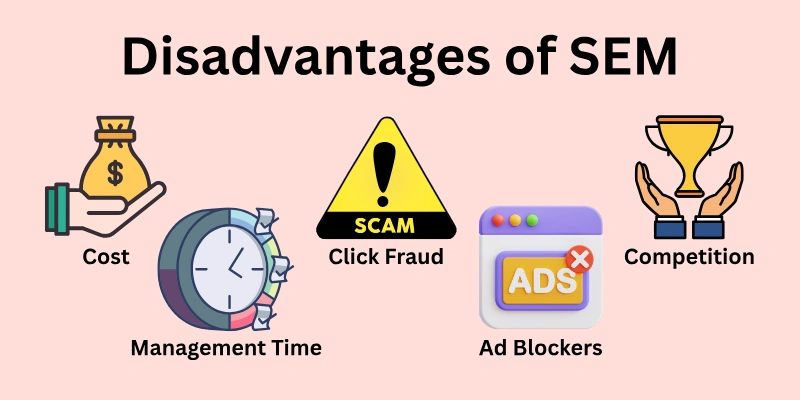
Here’s a list of disadvantages to consider:
- Cost
- Competition
- Click Fraud
- Ad Blockers
- Management Time
- Negative Perception
- Limited Organic Growth
- Constant Campaign Monitoring
Let’s cover all the cons of SEM in detail.
1. Cost
Paying for SEM can be expensive. Some keywords can have high cost per click (CPC), especially in businesses with a lot of competition. To get a good return on investment (ROI), you’ll need to carefully manage your spending and make sure your campaigns are successful.
2. Competition
There is a lot of competition in SEM. When businesses compete for the same keywords, CPCs can go up, making it hard to get high-profile ad spots. To stand out from the others, you’ll need to come up with plans.
3. Click Fraud
Click fraud happens when competitors or bots click on your ads for bad reasons, driving up your costs without bringing you any real leads. To keep your money safe, you need to put in place means to spot click fraud.
4. Ad Blockers
More and more people are using ad blockers, which stop them from seeing any of your ads. This could limit the number of people who see your ad and make it harder for you to connect with some of your target audience.
5. Management Time
To have good SEM campaigns, you have to keep working at them. You will have to spend time researching keywords, making ads, allocating budgets, and keeping an eye on how things are going. Also, constant optimization is needed to keep up with how search engine algorithms change.
6. Negative Perception
For some people, internet ads are annoying or don’t matter. To change this negative view and make sure your ads are seen as useful tools, you need to write ads that are interesting and connect with your target audience.
7. Limited Organic Growth
SEM gives you faster results, but it doesn’t directly improve your site’s ranking in normal search results. To make your SEM plan last longer, you might want to add organic SEO to it. This will help you get visitors without having to keep spending money on ads.
8. Constant Campaign Monitoring
SEM strategies need to be constantly checked to see how well they’re working and where they can be improved. To get the most out of your spending and improve performance, you may need to make changes on a regular basis.
Conclusion
This article has provided a detailed examination of the advantages and disadvantages of Search Engine Marketing (SEM). SEM is a great way for businesses to get online right away, but it’s important to keep in mind that it’s only one part of the picture.
My Recommendation: Having a clear plan is important for SEM to work. Before you start your campaign, you should carefully think about your budget, your target audience, and how competitive your business is. You can get the most out of SEM to reach your online marketing goals if you use its benefits while minimizing its possible problems.
FAQs
Here are some of the most commonly asked questions related to the pros and cons of SEM:
Advantages of search engines:
- Vast information access
- Easy to use
- Quick and efficient results
- Can be personalized (with account)
Disadvantages of search engines:
- Information overload (not all results are relevant)
- May prioritize ads over organic results
- Inaccurate or biased information possible
The major SEM disadvantages are:
- Costly (pay-per-click model)
- Competitive (high competition for ad space)
- Requires ongoing management and optimization
Here are some major benefits of SEM:
- Targeted advertising (reach specific audience)
- Measurable results (track clicks and conversions)
- Faster results than SEO
Advantages of SEO:
- Free to use (organic traffic)
- Long-term benefits (compounds over time)
- Builds brand credibility
Disadvantages of SEO:
- Takes time to see results (months or even years)
- Requires ongoing content creation and optimization
- Algorithm changes can impact rankings
- SEO Advantages ( Free, sustainable traffic, Builds brand authority)
- SEO Disadvantages ( Slower results, Requires ongoing effort)
- SEM Advantages (Faster results, Highly targeted traffic)
- Disadvantages of SEM (Ongoing cost, Requires campaign management






- Be Respectful
- Stay Relevant
- Stay Positive
- True Feedback
- Encourage Discussion
- Avoid Spamming
- No Fake News
- Don't Copy-Paste
- No Personal Attacks
- Be Respectful
- Stay Relevant
- Stay Positive
- True Feedback
- Encourage Discussion
- Avoid Spamming
- No Fake News
- Don't Copy-Paste
- No Personal Attacks
