Pros and Cons of IoT: Future of Connectivity!
Published: 29 Dec 2025
The Internet of Things (IoT) is like a digital magic that brings both good things and challenges. Let’s talk about the “Advantages and Disadvantages of IoT”.
On the one hand, it makes our lives easier and better. But on the other hand, there are problems, like keeping our information safe and private. It’s like a seesaw – sometimes up, sometimes down – and understanding both sides helps us see how IoT changes the way we live.
So, guys, without wasting time, let’s dig into the blog post.
Advantages of IoT
The Internet of Things brings forth a myriad of pros by connecting and empowering devices in our increasingly digital world.
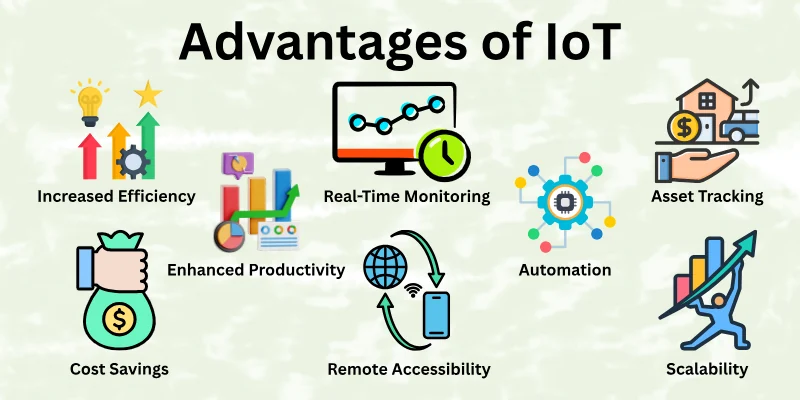
From optimizing efficiency to enhancing convenience, the benefits of IoT include:
- Increased Efficiency
- Enhanced Productivity
- Cost Savings
- Improved Decision-Making
- Real-Time Monitoring
- Remote Accessibility
- Automation
- Enhanced Customer Experience
- Better Resource Management
- Predictive Maintenance
- Energy Efficiency
- Improved Safety
- Data-driven Insights
- Asset Tracking
- Scalability
Let us cover each IoT advantage.
1. Increased Efficiency
- By automating routine jobs, IoT makes things run more smoothly.
- Enables devices quickly and easily share data so that tasks can be done swiftly.
- Improves the general performance of the system by getting rid of delays and barriers.
2. Enhanced Productivity
- IoT makes workflows better by connecting smart gadgets.
- Gives you facts in real time, which helps you make decisions and solve problems more quickly.
- Allows devices to work together, which increases efficiency in many fields.
3. Cost Savings
- IoT lowers operational costs by automating tasks and planning upkeep ahead of time.
- Uses as little energy as possible with smart energy management tools.
- Avoids downtime and expensive repairs by keeping an eye on the tools ahead of time.
4. Improved Decision-Making
- Gives real-time information about operations so that decisions can be made based on facts.
- Complete data analytics that improve strategy planning.
- Gives businesses the information they need at the right time to quickly adjust to changing situations.
5. Real-Time Monitoring
- Constantly monitors and collects data from connected devices.
- Provides instant feedback on system performance and status.
- Enables immediate response to anomalies or critical events.
6. Remote Accessibility
- Allows remote control and monitoring of devices and systems.
- Facilitates off-site management and troubleshooting.
- Enhances flexibility for businesses and individuals by providing access from anywhere.
7. Automation
- Automates repetitive tasks, reducing the need for manual intervention.
- Improves accuracy and consistency in processes.
- Frees up human resources for more complex and creative tasks.
8. Enhanced Customer Experience
- Personalizes services and products based on user data.
- Improves customer support through predictive issue resolution.
- Enables the creation of innovative, customer-centric solutions.
9. Better Resource Management
- Optimizes resource utilization through data-driven insights.
- Monitors and controls resource consumption in real-time.
- Improves sustainability practices through efficient resource allocation.
10. Predictive Maintenance
- Anticipates equipment failures before they occur.
- Minimizes downtime and extends the lifespan of machinery.
- Reduces maintenance costs by performing repairs proactively.
11. Energy Efficiency
- Monitors and manages energy consumption in real-time.
- Enables the optimization of energy usage based on demand.
- Integrates with smart grids for more sustainable and efficient energy practices.
12. Improved Safety
- Enhances workplace safety through real-time monitoring of conditions.
- Provides alerts and notifications for potential safety risks.
- Enables the implementation of preventive measures to reduce accidents.
13. Data-driven Insights
- Utilizes data analytics to gain valuable insights into operations.
- Supports informed decision-making by extracting meaningful patterns from data.
- Enables businesses to adapt strategies based on market trends and consumer behavior.
14. Asset Tracking
- Tracks the location and status of assets in real-time.
- Improves inventory management through accurate tracking.
- Reduces the risk of loss or theft through continuous monitoring.
15. Scalability
- Easily scales to accommodate the addition of new devices and functionalities.
- Supports the growth of interconnected systems without significant infrastructure changes.
- Adapts to the evolving needs of businesses and industries.
Disadvantages of IoT
While the Internet of Things has brought about remarkable advancements in connectivity and automation, it is crucial to be aware of its potential disadvantages.

Despite the convenience and innovation it offers, there are inherent risks and challenges associated with widespread IoT implementation.
Now, let’s delve into some of the drawbacks of IoT:
- Security Concerns
- Privacy Issues
- Interoperability Challenges
- Data Overload
- Limited Standardization
- High Implementation Costs
- Potential Job Displacement
- Energy Consumption
- Lack of Regulation
- Ethical Dilemmas
Let’s cover each con of iot.
1. Security Concerns
- Cyberattacks can happen on IoT devices, allowing hackers to get in without permission.
- If security measures aren’t strong enough, personal information could be stolen or invaded, which is a cause for concern.
- IoT makes it hard to protect against new cyber threats because everything is interconnected in this.
2. Privacy Issues
- Continuous data collection by IoT devices raises concerns about the misuse of personal information.
- Users may feel uneasy about the constant monitoring and sharing of their activities.
- The potential for data leaks can result in the exposure of sensitive information.
3. Interoperability Challenges
- Common communication methods make it harder for different IoT devices to work together smoothly.
- Failure to integrate devices from various makers may cause incompatibility issues, limiting their ability to work together.
- For IoT communities to be scalable and effective, they may face problems with interoperability.
4. Data Overload
- The amount of data that IoT devices produce can be too much for networks and storage systems to handle.
- Real-time processing and analysis of big datasets may put pressure on current infrastructure.
- Managing the huge amount of data that comes in is hard for businesses, which affects how decisions are made.
5. Limited Standardization
- There aren’t any global standards for IoT devices and apps, which makes them less uniform and compatible.
- IoT environments could become fragmented if different standards are used, which would make development and integration harder.
- Standardization is very important for making sure that the IoT works with other devices.
6. High Implementation Costs
- Setting up IoT infrastructure, sensors, and devices can take a big initial investment.
- Keeping up with software changes, security measures, and ongoing maintenance all add to the overall cost of implementing IoT.
- Some people and small businesses may not be able to use IoT solutions because they are too expensive.
7. Potential Job Displacement
- In some fields, automation through IoT could mean the loss of jobs.
- Humans may no longer be needed to do certain tasks because they can be done by machines.
- To deal with the possibility of losing jobs, the workforce needs to change and renew.
8. Energy Consumption
- A lot of IoT gadgets need to be powered all the time, which means they use more energy.
- Device batteries die faster when they have to send files over and over again.
- For IoT deployment to last, it’s important to find a balance between usefulness and energy efficiency.
9. Lack of Regulation
- A lack of complete regulatory frameworks for IoT could cause ethical and legal problems.
- Data and security issues may not have clear rules, which can lead to confusion.
- Standardized regulatory approaches are needed to stop possible misuse and protect users’ interests.
10. Ethical Dilemmas
- IoT introduces ethical considerations, such as the responsible use of collected data and potential biases in algorithms.
- Decision-making by autonomous IoT systems raises questions about accountability and transparency.
- Resolving ethical dilemmas is crucial for ensuring the responsible and fair implementation of IoT technologies.
Conclusion
So, to sum it all up, we’ve talked about all the advantages and disadvantages of the Internet of Things (IoT). On the bright side, IoT makes our lives easier and more interesting with cool stuff. But, there are also challenges, like keeping our information safe and some worries about jobs. Understanding both the good and the not-so-good helps us see how IoT is changing the way we live.
FAQs
Here are some of the most commonly asked questions related to the advantages and disadvantages of IoT:
IoT brings convenience and efficiency to our daily lives, automating tasks and connecting devices to make things smarter.
Yes, there are concerns about privacy, security, and potential job impacts associated with the widespread use of IoT.
IoT works by connecting devices to the internet, allowing them to share data and communicate. It is important because it enhances efficiency, improves decision-making, and makes our lives more convenient.
IoT pros include improved automation and connectivity, while cons involve security risks, privacy issues, and potential job displacement.
Adopting IoT technology requires caution due to security concerns, potential privacy infringements, and the need for proper regulations to address these challenges.





- Be Respectful
- Stay Relevant
- Stay Positive
- True Feedback
- Encourage Discussion
- Avoid Spamming
- No Fake News
- Don't Copy-Paste
- No Personal Attacks
- Be Respectful
- Stay Relevant
- Stay Positive
- True Feedback
- Encourage Discussion
- Avoid Spamming
- No Fake News
- Don't Copy-Paste
- No Personal Attacks
