Pros and Cons of LinkedIn: Boost Your Career!
Published: 24 Dec 2025
With over 830 million registered users, LinkedIn is the world’s largest professional networking platform.
But beyond simply connecting with colleagues, LinkedIn offers a wealth of resources for both job seekers and employers alike.
This article will explore the advantages and disadvantages of LinkedIn, helping you decide if it’s the right platform to help you achieve your professional goals or not.
Advantages of LinkedIn
In today’s professional world, LinkedIn can be a game-changer.

Here are some of the key advantages of using the LinkedIn app:
- Professional Networking
- Job Search
- Profile Building
- Content Sharing
- Industry Insights
- Group Discussions
- Company Research
- Skills Endorsements
- Following Companies & Influencers
- Learning & Development
Let us cover all the pros of LinkedIn in detail.
1. Professional Networking
LinkedIn is great for making professional connections. It lets you meet with current and former coworkers, as well as professionals in your field. This network can help you find job prospects, professional advice, and information about your field.
2. Job Search
There are a lot of great jobs on LinkedIn. You can look through job postings that match your skills and experience, and recruiters use LinkedIn to find suitable applicants. Having a well-written resume makes you more visible and more appealing as a candidate.
3. Profile Building
Making a profile is very important on LinkedIn. Your profile is like a resume and brand for you online. Potential employers and coworkers will get a good impression of your professionalism if you list your experience, skills, and achievements.
4. Content Sharing
When you share content, you can become known as an expert in your area. Share interesting stories, news about your industry, or even your own original content to show off your skills and connect with other people in the same field.
5. Industry Insights
On LinkedIn, it’s easy to find industry insights. To keep up with trends, news, and new developments in your field, follow companies and people who have a lot of impact in it. You can use this information to help you make choices about your job and career.
6. Group Discussions
Group discussions give you a chance to meet other professionals who share your interests and have deep talks with them. You can gain useful information, share the best ways to do things, and learn from other people’s experiences.
7. Company Research
LinkedIn makes it easy to look up names of companies. You can look up information about possible employers, find out how they run their business, and even make links with people who work there. This study can help you get better job interviews.
8. Skills Endorsements
Skills Endorsements from colleagues and connections add credibility to your profile. They validate your skills and make you a more well-rounded candidate in the eyes of possible employers.
9. Following Companies & Influencers
You can stay up to date on business trends and connect with thought leaders by following Companies & Influencers. This can keep you ahead of the game, give you ideas, and inspire you.
10. Learning & Development
There are lots of chances to learn and grow on LinkedIn. You can stay competitive in your job by taking online courses, attending webinars, and using other tools to improve your professional skills.
Disadvantages of LinkedIn
While LinkedIn offers a wealth of professional benefits, it’s not without drawbacks.
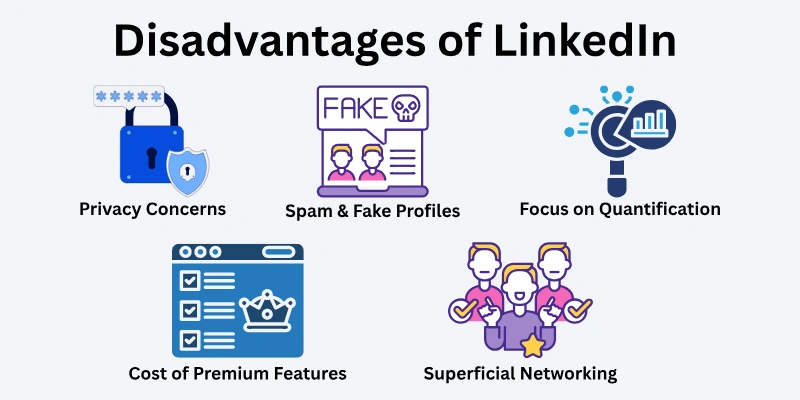
Here are some of the main disadvantages of linkedin to consider:
- Privacy Concerns
- Spam & Fake Profiles
- Focus on Quantification
- Superficial Networking
- Limited Character Count (for posts)
- Cost of Premium Features
Let us cover all the cons of LinkedIn in detail.
1. Privacy Concerns
Because LinkedIn is a public site, a lot of people can see your personal information. People who want to keep some information secret might be worried about this. Be careful about what you share, and make sure your private settings are right for that.
2. Spam & Fake Profiles
Sadly, marketers and people trying to sell you something can send you spam messages on LinkedIn. Also, fake accounts with false information can be made. Be wary of messages you didn’t ask for and check the accounts of people you want to connect with before you connect.
3. Focus on Quantification
LinkedIn can place a high value on quantifiable achievements, which might take over other talents and experiences. Do not feel obligated to focus entirely on figures; instead, showcase your useful skills and diverse experience.
4. Superficial Networking
LinkedIn’s broad network can result in fake connections. Building true relationships requires effort, so focus quality interactions above merely adding a big number of connections. Before accepting someone’s connection make sure that they are that much worthy to be added in your profile.
5. Limited Character Count (for posts)
LinkedIn limits the number of characters that can be used in posts. This may limit your capacity to properly express oneself. So, consider using a combination of short language, images, and external links to effectively communicate your thoughts and which not everyone can manage!
6. Cost of Premium Features
While a basic LinkedIn account is free but many features, such as advanced search filters or messaging people outside of your network, need a premium subscription. And this could be an additional cost to consider which cannot be afforded by everyone.
Conclusion
In this article, we’ve covered all the pros and cons of LinkedIn in detail. We’ve explored how valuable the LinkedIn app can be for landing a job and enhancing our professional portfolio. However, we’ve also discussed some of its drawbacks, such as the need for a paid account to access advanced search features and more.
So, folks, the key is to leverage LinkedIn effectively: fine-tune your profile, highlight your skills through posts and articles, but always remain mindful of its limitations.
FAQs
Here are some of the most commonly asked questions related to the advantages and disadvantages of LinkedIn:
(Yes) LinkedIn offers a wealth of professional connections, job opportunities, and industry insights. It can be a valuable tool for career advancement.
(No) While salespeople use LinkedIn effectively, it’s valuable for professionals in all industries. It allows you to connect with colleagues, showcase your skills, and stay informed.
(Be cautious) While you can control your privacy settings, some profile information is always public. Be mindful of what you share.
(Be selective) Don’t accept connection requests from unknown profiles and adjust your settings to limit unwanted messages.
(Focus on quality) While quantifiable achievements are important, highlight your skills and experiences with quality descriptions, not just numbers.
(Engage and participate) Don’t just collect connections. Like, comment, and share posts to engage with your network and build meaningful relationships.
(Be strategic) Curate your feed to follow relevant companies and influencers. Use filters and prioritize information valuable to your career goals.
(Consider your needs) The free account offers a lot. If you need advanced search options or wider outreach, consider a premium subscription, but weigh the cost-benefit.


- Be Respectful
- Stay Relevant
- Stay Positive
- True Feedback
- Encourage Discussion
- Avoid Spamming
- No Fake News
- Don't Copy-Paste
- No Personal Attacks
- Be Respectful
- Stay Relevant
- Stay Positive
- True Feedback
- Encourage Discussion
- Avoid Spamming
- No Fake News
- Don't Copy-Paste
- No Personal Attacks
