Pros & Cons of DBMS: Manage Your Data Effectively
Published: 24 Feb 2026
Do you know about Database Management Systems, or DBMS for short? Well, DBMS is like a digital librarian that helps organize and manage a large amount of information in a computer system.
It’s super helpful because it makes it easier for people to store, retrieve, and manipulate data. But like anything else, DBMS comes with its own set of advantages and disadvantages.
So, in this article we will cover all the advantages and disadvantages of DBMS in detail.
Advantages of DBMS
When it comes to handling vast amounts of information, Database Management Systems (DBMS) emerge as powerful tools, offering a multitude of benefits.
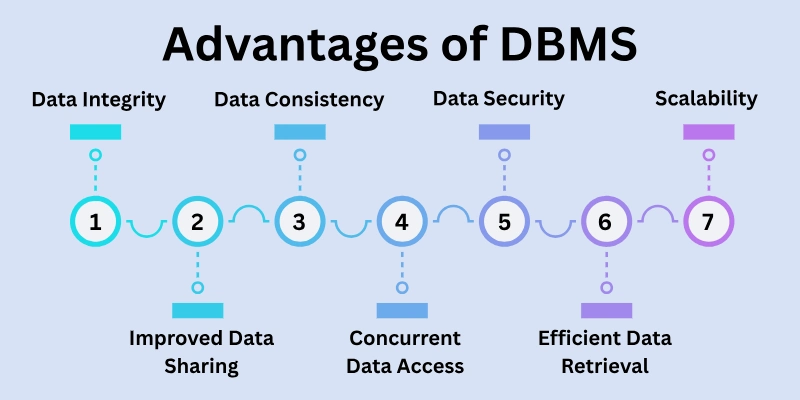
So, guys here I have come up with a list of all the DBMS advantages:
- Data Integrity
- Data Security
- Data Consistency
- Efficient Data Retrieval
- Concurrent Data Access
- Reduced Data Redundancy
- Improved Data Sharing
- Enhanced Data Integrity
- Simplified Data Maintenance
- Scalability
Let’s cover each positive aspect of the database management system.
1. Data Integrity
- DBMS ensures that data remains accurate and consistent throughout its lifecycle.
- It sets limits and rules to stop people from entering wrong or incomplete data.
- Users can trust the information in the database to help them make smart choices as long as the data integrity is kept.
2. Data Security
- To keep private data safe, DBMS uses strong security measures like encryption, authentication, and access control.
- It lowers the chance of someone getting in without permission or data being stolen.
- DBMS builds trust among users and helps companies meet regulatory requirements by making data more secure.
3. Data Consistency
- DBMS makes sure that data in all records and files stays the same and in sync.
- It makes sure that there are no mistakes or problems by updating related data elements automatically when they are changed.
- Having consistent data representation makes it easier to record and analyze data correctly.
4. Efficient Data Retrieval
- DBMS makes it easier to get data by using clustering, query optimization, and caching.
- Structured query languages (SQL) or search functions let people quickly get to the information they need.
- Efficient data retrieval raises productivity by cutting down on the time and work needed to pull out specific subsets of data from big datasets.
5. Concurrent Data Access
- DBMS lets multiple users or apps access data at the same time without affecting the integrity of the data.
- It takes care of the methods for concurrency control that keep data from clashing.
- Concurrent data access improves teamwork and scalability, which helps businesses handle more work without losing quality.
6. Reduced Data Redundancy
- DBMS reduces the amount of duplicate data by putting it into standardized tables.
- By getting rid of duplicate data entries, it saves storage space and makes maintenance easier.
- Getting rid of unnecessary copies of data makes it more accurate and consistent while also making data management easier.
7. Improved Data Sharing
- DBMS makes it easy for people in different areas, teams, or locations to share data without any problems.
- It supports centralized data stores that only authorized users can view.
- Better data sharing makes it easier for groups to talk to each other and make decisions.
8. Enhanced Data Integrity
- DBMS uses referential integrity constraints to make sure that the relationships between linked data entities stay consistent.
- It checks changes to data automatically to make sure they follow rules and variables that have already been set.
- Enhanced data integrity protects the database’s logical integrity, stopping data errors and keeping data correct.
9. Simplified Data Maintenance
- DBMS makes it easier to maintain data by automating jobs like backup, recovery, and data migration.
- It gives you tools for managing databases, keeping an eye on them, and making them run faster.
- Simplifying data care cuts down on administrative work, lowers risks, and makes sure that the database is always available and reliable.
10. Scalability
- Database management systems (DBMS) can be expanded to handle more data, users, or application tasks.
- To increase storage space, it allows both horizontal and vertical scaling.
- Scalability helps businesses adjust to new technologies and changing business needs.
Disadvantages of DBMS
While DBMS offer numerous benefits, it’s essential to also consider their limitations and drawbacks.
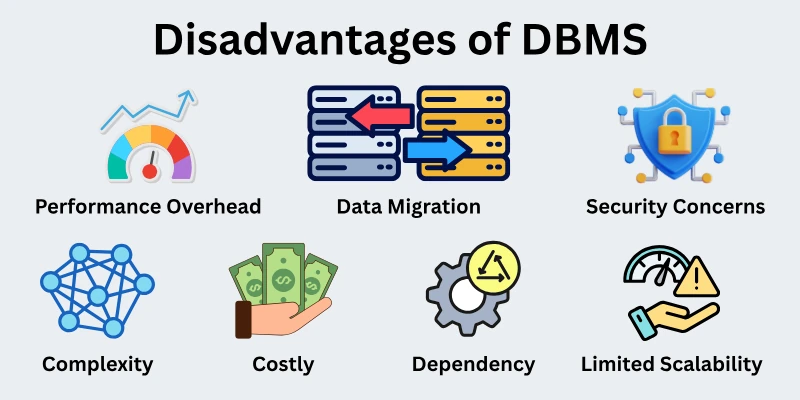
So, let’s explore some of the disadvantages of DBMS that organizations need to be aware of when implementing such systems.
- Costly Implementation
- Complexity
- Dependency on a DBMS Vendor
- Potential for Data Inconsistency
- Performance Overhead
- Security Concerns
- Limited Scalability
- Data Migration Challenges
- Need for Skilled Personnel
- Risk of System Failure
Let’s cover each limitation of database management system in detail.
1. Costly Implementation
- Setting up a DBMS takes a lot of money up front.
- To get the best results from the DBMS, businesses may need to buy special hardware.
- A DBMS’s total cost of ownership (TCO) includes ongoing costs like assistance, maintenance, and upgrades, which can put a strain on the budget.
2. Complexity
- It’s important to know a lot about database administration and system management in order to design, implement, and run DBMS systems.
- Because DBMS architectures are so complicated, it may take longer to build software.
- It takes close attention to detail and a deep understanding of database ideas to manage the complicated parts of database schemas, queries, and optimizations.
3. Dependency on a DBMS Vendor
- Customers of a proprietary DBMS must rely on the vendor for assistance, updates, and the ability to work with other software.
- Lack of freedom and difficulty in adopting new technologies or solutions can be caused by vendor lock-in.
- The organization’s long-term database strategy could be affected by changes in the vendor’s business strategy, product plan, or support policies.
4. Potential for Data Inconsistency
- In multi-user scenarios, concurrent data access can lead to errors in data or disputes.
- Inadequate transaction management or concurrency control procedures might cause missing updates or inconsistent query results.
- Ensuring data consistency over remote databases or replicated instances introduces new problems and risks.
5. Performance Overhead
- DBMS overhead, such as query processing, transaction management, and indexing, can affect system performance and response times.
- Poor database design and poor query execution plans might worsen performance difficulties.
- So balance the trade-offs between data consistency, availability, and performance through strict modifying and optimization.
6. Security Concerns
- DBMS vulnerabilities, such as SQL injection attacks, data leaks, and unauthorized access, are serious security issues.
- To prevent security concerns, it is critical to implement strong authentication and encryption systems.
- Compliance with data protection rules and industry standards complicates database security management.
7. Limited Scalability
- Scaling a DBMS to meet increasing data volumes or user loads may necessitate significant hardware or architectural changes.
- Horizontal scaling, or adding more servers or nodes, can complicate data partitioning, replication, and synchronization.
- Scalability constraints may limit the ability to fulfill changing business requirements or handle sudden increases in workload demand.
8. Data Migration Challenges
- Data migration between DBMS platforms can be complex and time-consuming.
- Compatibility difficulties, data format mismatches, and schema mappings may occur throughout the migration process.
- If data migration is not properly managed, it can result in data loss, corruption, or disruption of corporate activities.
9. Need for Skilled Personnel
- Skilled database administrators and developers are required for effective DBMS management and optimization.
- Recruiting and retaining qualified professionals with database design, SQL programming, and performance tuning skills can be difficult.
- The lack of skilled DBMS professionals may limit the organization’s capacity to fully utilize the system’s capabilities.
10. Risk of System Failure
- DBMS issues, such as hardware crashes, software bugs, or power outages, may damage data availability and business processes.
- Implementing comprehensive backup and recovery procedures is critical for mitigating the impact of system failures.
- High availability and disaster recovery solutions may result in increased costs and complexity.
Conclusion
In this article, we’ve explored both the advantages and disadvantages of Database Management Systems (DBMS), shedding light on their importance and potential challenges. As organizations increasingly rely on data to drive decision-making and innovation, understanding the nuances of DBMS becomes crucial.
If you still have any confusion regarding DBMS, you can ask me in the comment section.
FAQs
Here are some of the most commonly asked questions related to the pros and cons of DBMS:
A DBMS, or Database Management System, is software that enables users to store, retrieve, and manage data in a structured format. It acts as an intermediary between users and the database, facilitating data organization, manipulation, and security.
DBMS is essential for businesses and organizations as it provides efficient and organized storage of data, ensures data integrity and security, facilitates data sharing and collaboration, enables faster and more accurate data retrieval, and supports decision-making processes based on reliable data.
Some popular DBMS software include Oracle Database, Microsoft SQL Server, MySQL, PostgreSQL, MongoDB, IBM Db2, and SQLite.
There are mainly four types of DBMS: relational DBMS (RDBMS), hierarchical DBMS (HDBMS), network DBMS (NDBMS), and object-oriented DBMS (OODBMS).
Pros of DBMS:
- Improved data organization and storage efficiency
- Enhanced data security and integrity
- Facilitated data sharing and collaboration
Cons of DBMS:
- High implementation and maintenance costs
- Complexity in design and management
- Dependency on a specific DBMS vendor






- Be Respectful
- Stay Relevant
- Stay Positive
- True Feedback
- Encourage Discussion
- Avoid Spamming
- No Fake News
- Don't Copy-Paste
- No Personal Attacks
- Be Respectful
- Stay Relevant
- Stay Positive
- True Feedback
- Encourage Discussion
- Avoid Spamming
- No Fake News
- Don't Copy-Paste
- No Personal Attacks
